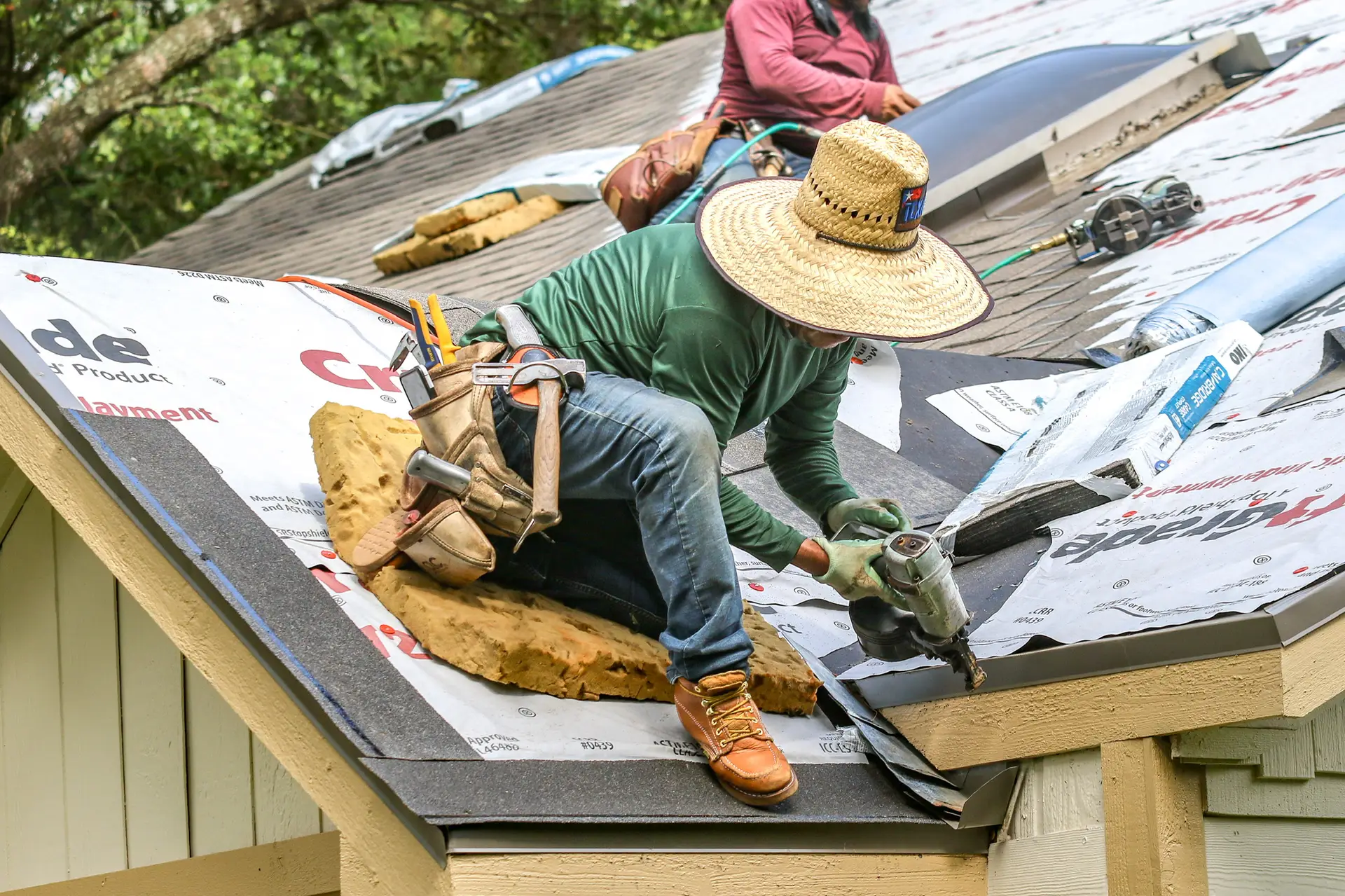
Severe weather is part of life in Southeast Texas. High winds, hail, and heavy rain regularly move through the Lake Houston area, often impacting roofing systems in ways that are not immediately visible from the ground.
Homeowners in Humble, Kingwood, Atascocita, and surrounding Greater Houston communities frequently do not notice roof damage until weeks or even months later when ceiling stains, minor leaks, or rising energy bills begin to appear.
Understanding how storms affect roofing systems and knowing what to look for can help prevent minor damage from turning into long-term structural issues.
How Storms Affect Roofs in Southeast Texas
Storm systems in this region create a specific pattern of roofing damage. Even when shingles appear intact from the street, underlying materials may have been compromised.
Common storm-related roofing issues include:
• Wind uplift along ridges and roof edges
• Hail bruising that weakens shingles without obvious punctures
• Granule loss that shortens shingle lifespan
• Flashing movement around vents and chimneys
• Water intrusion beneath lifted materials
Because much of this damage is subtle, a professional roof inspection is often necessary to properly assess and document it.
If insurance involvement may be required, you can also review how we handle storm damage and insurance claims for homeowners throughout the Greater Houston area.
7 Signs Your Roof May Have Storm Damage
Storm damage does not always present itself in dramatic ways. In many cases, the warning signs are small but important.
1. Missing or Lifted Shingles
Strong wind gusts can break the adhesive seal that holds shingles in place. Even small lifted areas allow moisture to move beneath the roofing system over time.
2. Hail Impact Marks
Hail can create darkened spots or soft areas where protective granules have been displaced. From the ground, the roof may appear intact while hidden shingle damage exists.
3. Excess Granules in Gutters
After a storm, noticeable granule buildup in gutters or near downspouts may indicate that shingles have absorbed impact.
4. Bent or Detached Flashing
Flashing protects vulnerable roof transitions around chimneys, vents, and roof lines. Wind can shift or loosen these areas, creating hidden entry points for water.
5. Interior Ceiling Stains
Water discoloration, bubbling paint, or minor drywall softening may signal moisture intrusion from above.
6. Sudden Increase in Energy Costs
Storm damage can disrupt ventilation and insulation performance, leading to higher cooling bills during warmer months.
7. Soft or Uneven Roof Sections
Prolonged moisture exposure can weaken roof decking beneath shingles, causing subtle sagging or uneven areas.
If you notice any of these signs, scheduling a roof inspection is a practical next step.
What To Do After a Storm in Humble or Kingwood
After severe weather passes, taking a measured and informed approach can help protect your home.
Start by documenting anything visible from the ground. Take clear photos of missing shingles, fallen debris, damaged gutters, or visible impact areas. This documentation can be useful if an insurance claim becomes necessary.
However, many types of storm damage cannot be seen without a closer inspection. A licensed roofing contractor can safely evaluate areas that are not visible from below and provide detailed documentation for homeowners.
When Is Roof Repair Enough and When Is Replacement Necessary?
Not every storm requires full roof replacement. In many situations, isolated damage can be resolved through targeted repairs.
Roof repair may be appropriate when damage is limited to a small section, the roofing system is relatively new, and structural decking remains intact.
In other cases, full replacement may provide stronger long-term protection.
Roof replacement is often recommended when impact damage is widespread, shingle integrity has been significantly compromised, or the roof is nearing the end of its service life.
A professional evaluation helps determine the most appropriate solution.
Frequently Asked Questions About Storm Damage Roofing in Southeast Texas
How long do I have to file a roof insurance claim in Texas?
Most policies require timely reporting, often within one year of the storm event. Always review your individual policy terms.
Can hail damage be invisible from the ground?
Yes. Many hail impacts bruise shingles without creating visible holes.
Should I contact a roofer before calling insurance?
A professional inspection can help you understand the extent of potential damage before initiating a claim.
How often should roofs in this area be inspected?
Annual inspections, along with inspections following major storms, are recommended in Southeast Texas.
Schedule a Roof Inspection
If your home is located in Humble, Kingwood, Atascocita, Spring, or surrounding Greater Houston communities and you suspect storm damage, a professional evaluation can provide clarity.
Early identification helps prevent minor issues from developing into larger structural concerns.
Contact Ransom’s Roofing & Remodeling to schedule your inspection.
(281) 763-9541